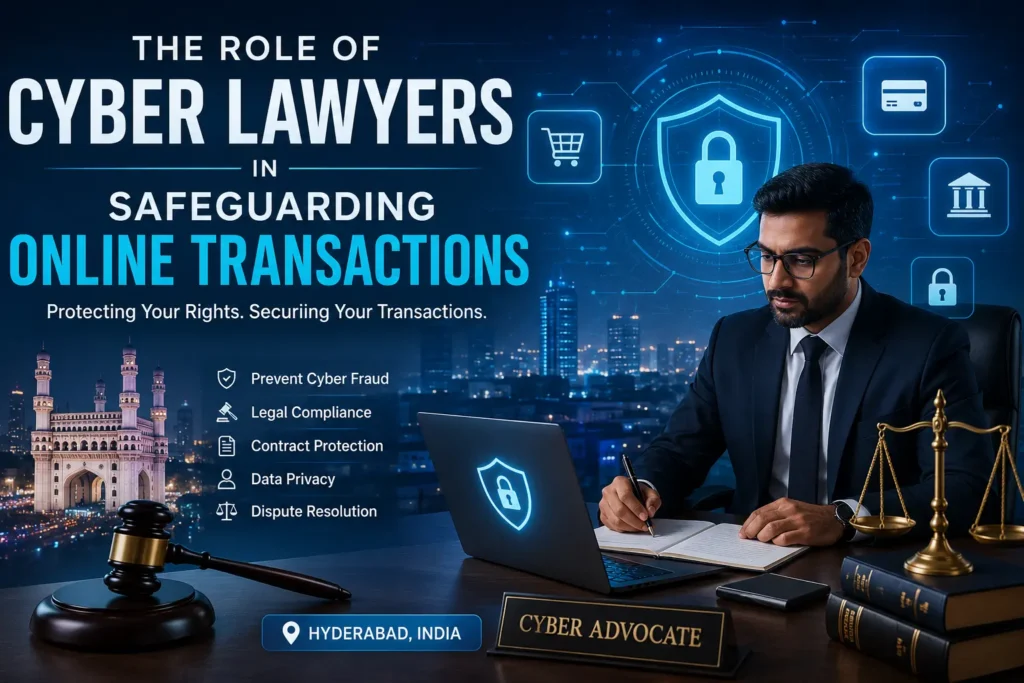
The digital economy has transformed how individuals and businesses conduct transactions. From online shopping and digital banking to cryptocurrency investments and e-commerce contracts, millions of transactions occur online every day. While this convenience has created tremendous opportunities, it has also increased the risk of cyber fraud, identity theft, payment disputes, data breaches, and online scams.
This is where the role of cyber lawyers in online transactions becomes crucial.
Cyber lawyers help individuals, businesses, startups, financial institutions, and e-commerce platforms navigate legal risks associated with digital transactions. They ensure compliance with cyber laws, protect digital rights, resolve disputes, and provide legal remedies when cybercrime occurs.
What Is the Role of a Cyber Lawyer in Online Transactions?
A cyber lawyer protects individuals and businesses involved in online transactions by ensuring legal compliance, preventing cyber fraud, handling digital disputes, securing data privacy rights, drafting legally enforceable online agreements, and representing clients in cybercrime-related matters.
They act as legal guardians of digital interactions, helping users transact safely in an increasingly connected world.
Why Online Transactions Need Legal Protection
Online transactions may appear simple, but several legal risks exist behind every digital payment or online agreement.
Common Risks in Online Transactions
Payment Fraud
Unauthorized transactions, phishing attacks, and stolen card details can result in financial losses.
Identity Theft
Cybercriminals may misuse personal information to access bank accounts or conduct fraudulent transactions.
Data Breaches
Businesses handling customer data face significant liability if sensitive information is exposed.
Fake E-commerce Platforms
Consumers may become victims of fraudulent websites offering products or services that never get delivered.
Contract Disputes
Digital agreements can lead to misunderstandings regarding payment terms, delivery obligations, or service commitments.
A cyber lawyer helps identify and mitigate these risks before they become costly legal problems.
Key Responsibilities of Cyber Lawyers in Online Transactions
1. Drafting and Reviewing Digital Contracts
Many online transactions rely on digital agreements such as:
- Terms and Conditions
- Privacy Policies
- User Agreements
- SaaS Contracts
- E-commerce Vendor Agreements
- Online Service Agreements
A cyber lawyer ensures these documents are legally enforceable and compliant with applicable laws.
Why It Matters
Poorly drafted contracts often create loopholes that can lead to disputes and financial losses.
2. Ensuring Compliance with Cyber Laws
Businesses operating online must comply with multiple regulations.
Important Legal Areas
- Information Technology Act, 2000
- Digital Personal Data Protection Act (DPDP Act)
- Consumer Protection Laws
- Intellectual Property Laws
- E-commerce Regulations
Cyber lawyers help organizations remain compliant and avoid penalties.
3. Handling Cyber Fraud Cases
When cybercrime occurs, immediate legal intervention is critical.
Examples include:
- UPI fraud
- Online banking fraud
- Credit card fraud
- Cryptocurrency scams
- Business email compromise
- Social media impersonation
A cyber lawyer assists in:
- Filing cybercrime complaints
- Reporting incidents to authorities
- Recovering funds where possible
Initiating legal proceedings
4. Data Privacy and Consumer Protection
Consumers increasingly share personal information online.
Cyber lawyers help businesses:
- Draft privacy policies
- Manage consent requirements
- Respond to data breaches
- Handle privacy complaints
For consumers, they help enforce legal rights when data misuse occurs.
5. Resolving Online Transaction Disputes
Not every transaction dispute requires lengthy litigation.
Cyber lawyers often resolve issues through:
Alternative Dispute Resolution (ADR)
- Mediation
- Arbitration
- Negotiation
This approach saves time, legal costs, and business disruption.
6. Protecting Intellectual Property in Digital Transactions
Online businesses regularly deal with:
- Copyright infringement
- Trademark misuse
- Software piracy
- Unauthorized content copying
Cyber lawyers help protect intellectual property rights and take action against violations.
Cyber Lawyer vs Traditional Lawyer: Which Is Better for Online Transaction Issues?
| Factor | Cyber Lawyer | Traditional Lawyer |
| Cybercrime Expertise | High | Limited |
| Digital Evidence Handling | Specialized | General |
| Data Privacy Laws | Expert Knowledge | Basic Knowledge |
| Online Fraud Cases | Strong Experience | Varies |
| Technology Contracts | Specialized | Limited |
| Digital Compliance | Comprehensive | Limited |
For issues involving online transactions, cyber fraud, data protection, digital contracts, or e-commerce disputes, a cyber lawyer is usually the better choice.
Cost of Hiring a Cyber Lawyer in Hyderabad
One of the most common questions is:
How Much Does a Cyber Lawyer Charge in Hyderabad?
Costs vary based on:
- Complexity of the case
- Urgency
- Court representation requirements
- Corporate compliance needs
- Documentation involved
Typical Cost Factors
Consultation Fees
Initial legal consultations may range from basic advisory sessions to comprehensive legal assessments.
Compliance Services
Businesses seeking cyber compliance support may pay project-based or retainer-based fees.
Cybercrime Litigation
Costs depend on the complexity and duration of the legal proceedings.
The best approach is to consult an experienced cyber advocate who can assess your specific situation and provide a customized estimate.
Common Mistakes People Make During Online Transactions
Many cybercrime cases arise because users unknowingly expose themselves to risks.
1: Ignoring Terms and Conditions
Users often accept agreements without understanding their legal implications.
2: Using Unverified Websites
Fraudulent websites frequently imitate legitimate businesses.
3: Delaying Cybercrime Reporting
Immediate reporting increases the chances of evidence preservation and fund recovery.
4: Weak Data Security Practices
Poor password management and unsecured devices increase vulnerability.
5: Not Seeking Legal Advice Early
Many victims wait until losses become substantial before consulting a cyber lawyer.
Early intervention often leads to better outcomes.
Real-World Examples Where Cyber Lawyers Add Value
1: E-Commerce Payment Fraud
An online retailer experiences fraudulent chargebacks.
A cyber lawyer helps recover losses and strengthen contractual protections.
2: Data Breach Incident
A healthcare startup suffers a customer data breach.
The cyber lawyer guides legal reporting, compliance obligations, and liability management.
3: UPI Fraud Case
An individual loses money through a phishing scam.
The cyber lawyer assists with cybercrime reporting and legal recovery procedures.
How Should You Decide If You Need a Cyber Lawyer?
You should consider hiring a cyber lawyer if:
- You are a business handling online payments.
- You collect customer data.
- You operate an e-commerce platform.
- You experienced cyber fraud.
- You are dealing with a digital contract dispute.
- Your intellectual property is being misused online.
- You need compliance with cyber regulations.
For most online transaction-related legal issues, early legal guidance is significantly less expensive than resolving disputes after damage occurs.
Conclusion
The role of cyber lawyers in safeguarding online transactions extends far beyond litigation. They serve as strategic legal advisors who help businesses and individuals navigate the complex intersection of law and technology.
As online transactions continue to grow across Hyderabad and India, cyber risks will become increasingly sophisticated. Whether you are a consumer, entrepreneur, startup founder, or established business owner, partnering with an experienced cyber advocate can help protect your finances, data, reputation, and legal rights.
In today’s digital economy, cyber legal protection is no longer optional—it is an essential part of conducting safe and secure online transactions.
Frequently Asked Questions (FAQs)
A cyber lawyer helps resolve disputes involving online payments, digital contracts, fraud, data breaches, and e-commerce transactions.
Yes. While recovery depends on circumstances, cyber lawyers assist with legal procedures, cybercrime complaints, and recovery efforts.
Businesses involved in digital operations, customer data processing, online payments, or e-commerce activities greatly benefit from cyber legal support.
Yes. Startups often require assistance with compliance, contracts, privacy policies, and intellectual property protection.