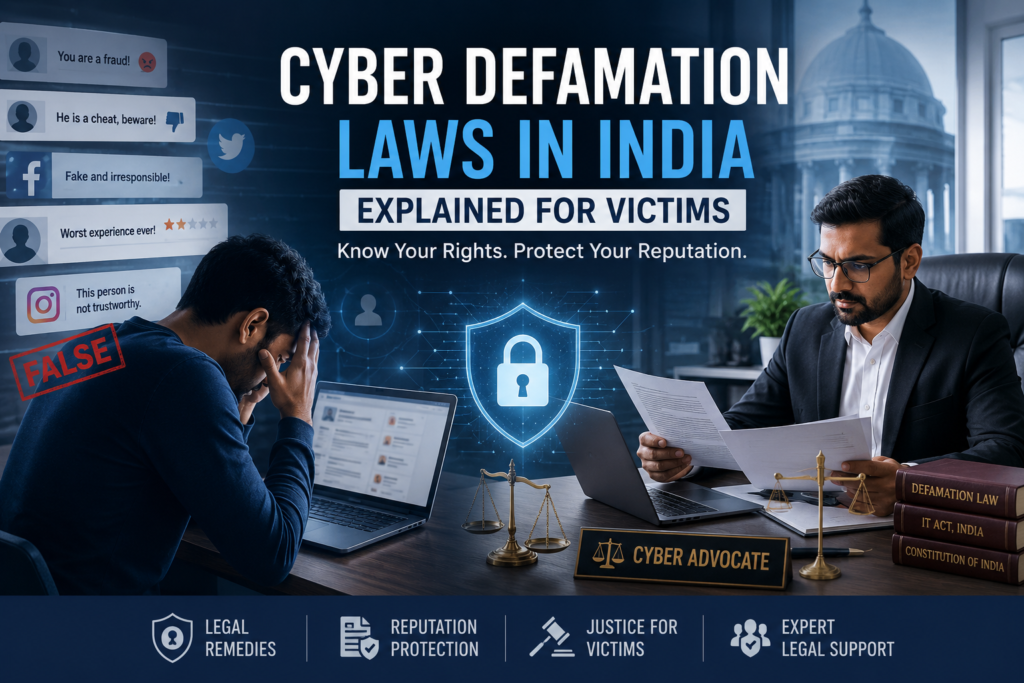
Cyber defamation is the publication of a false statement about a person or business on the internet or through digital communication, such as social media, messaging apps or websites, that harms their reputation. In India it is treated under the same civil and criminal defamation laws as offline defamation, with online content counting as published material.
In today’s digital world, a single false social media post, fake review, edited image, or malicious WhatsApp message can damage your reputation within hours. Whether the content is shared publicly or circulated in private groups, the consequences can affect your career, business, relationships, and mental well-being.
If you’re facing false accusations, character assassination, fake social media profiles, defamatory videos, or malicious online campaigns, it’s important to know that Indian law provides legal remedies to protect your reputation.
Understanding Cyber Defamation Laws in India can help you take the right legal steps quickly, preserve crucial evidence, and prevent further damage.
This guide explains what cyber defamation is, which laws apply, how victims can seek justice, and when consulting an experienced cyber advocate in Hyderabad can make a significant difference.
What Are Cyber Defamation Laws in India?
Cyber defamation occurs when someone publishes or shares false statements through digital platforms that harm another person’s reputation.
In India, cyber defamation is addressed through a combination of:
- Civil defamation laws
- Criminal defamation provisions
- Information Technology Act provisions where applicable
- Other criminal laws depending on the nature of the offence
Victims can seek:
- Removal of defamatory content
- Injunctions preventing further publication
- Monetary compensation (civil remedy)
- Criminal prosecution in appropriate cases
- Legal notices against the offender
- Action against fake social media accounts
The earlier you act, the easier it becomes to preserve evidence and reduce long-term reputational damage.
What Is Cyber Defamation?
Cyber defamation refers to publishing, posting, sharing, forwarding, or uploading false and defamatory content through electronic platforms with the intention—or effect—of damaging someone’s reputation.
Common examples include:
- False allegations on Facebook or Instagram
- Defamatory WhatsApp messages
- Fake Google reviews
- Edited photos intended to insult someone
- False YouTube videos
- Defamatory LinkedIn posts
- Anonymous social media accounts spreading rumours
- Fake news targeting an individual or business
Unlike traditional defamation, online content spreads rapidly and often remains accessible unless legal action is taken.
What Laws Protect Victims of Cyber Defamation in India?
Cyber defamation is not governed by a single law. Instead, several legal provisions may apply depending on the facts of the case.
Criminal Defamation
False statements intended to damage a person’s reputation may amount to criminal defamation under Indian criminal law.
Possible remedies include:
- Filing a criminal complaint
- Summoning the accused before the court
- Criminal penalties upon conviction
Civil Defamation
Victims may also file a civil suit seeking:
- Financial compensation
- Damages for reputational loss
- Court injunctions
- Removal of defamatory publications
Civil remedies are often preferred where the victim wants compensation or immediate restraint orders.
Information Technology Act
Although the Information Technology Act does not specifically define “cyber defamation,” it supports investigation of digital offences, electronic evidence, intermediary obligations, and cybercrime-related procedures.
Depending on the facts, additional cybercrime provisions may also apply.
What Should You Do Immediately After Online Defamation?
Many victims make emotional decisions that weaken their legal case.
Instead, follow these practical steps:
Preserve Evidence
Take screenshots showing:
- Date
- Time
- Username
- URL
- Comments
- Shares
- Likes
Where possible, download the webpage or preserve electronic records.
Avoid Public Arguments
Responding aggressively online can complicate legal proceedings.
Instead:
- Avoid abusive replies.
- Do not threaten the offender publicly.
- Let your legal strategy guide your response.
Most platforms allow users to report:
- Fake profiles
- Harassment
- Defamation
- Identity misuse
Platform reporting can sometimes result in quicker content removal.
Consult a Cyber Advocate
An experienced cyber advocate can help determine:
- Whether the content qualifies as defamation
- Which legal provisions apply
- Whether to send a legal notice
- Whether civil or criminal action is appropriate
- Whether urgent court intervention is required
Common Types of Cyber Defamation Cases
Victims commonly approach cyber advocates for matters involving:
- Fake Facebook profiles
- False Instagram accusations
- WhatsApp rumours
- YouTube character assassination
- Defamatory Google reviews
- LinkedIn reputation attacks
- Fake news articles
- Revenge posts
- Morphed photographs
- Anonymous trolling campaigns
- False allegations during divorce disputes
- Business reputation attacks
Each situation requires a different legal strategy.
Civil Defamation vs Criminal Defamation
| Civil Defamation | Criminal Defamation |
| Focuses on compensation | Focuses on punishment |
| Seeks damages | May result in criminal penalties |
| Injunctions available | Criminal proceedings initiated |
| Reputation recovery | Accountability of offender |
Many cases involve pursuing both remedies simultaneously, depending on legal advice.
Can Anonymous Social Media Accounts Be Traced?
Yes—under appropriate legal procedures.
Although anonymous accounts may appear difficult to identify, investigators can often obtain digital evidence through:
- IP address records
- Platform information
- Device identifiers
- Internet service provider records
- Digital forensic analysis
Tracing depends on the available evidence and cooperation from relevant authorities and intermediaries.
What Evidence Strengthens a Cyber Defamation Case?
Strong evidence often includes:
- Screenshots
- URLs
- Original posts
- Video recordings
- Chat history
- Email conversations
- Witness statements
- Digital forensic reports
- Metadata
- Publication timestamps
The stronger the evidence, the stronger your legal position.
Common Mistakes Victims Make
Many victims unintentionally weaken their case.
Avoid these mistakes:
Deleting Evidence
Never delete defamatory posts before preserving them.
Delaying Legal Advice
Online content spreads rapidly.
Delays may result in:
- More shares
- Greater reputational damage
- Loss of electronic evidence
Responding Emotionally
Public arguments may escalate the dispute.
Stay professional.
Ignoring Fake Accounts
Ignoring impersonation often allows further misuse.
Prompt legal action is usually more effective.
Is It Worth Taking Legal Action?
If the defamatory content has affected:
- Employment
- Business reputation
- Marriage prospects
- Professional credibility
- Educational opportunities
- Mental peace
then legal consultation is generally worthwhile. Not every offensive comment amounts to defamation. An experienced cyber advocate can assess whether your case meets the legal threshold and recommend the most appropriate course of action
How Much Does a Cyber Defamation Case Cost?
There is no fixed cost because legal fees depend on factors such as:
- Complexity of the matter
- Number of parties involved
- Civil or criminal proceedings
- Urgent injunction requirements
- Digital evidence analysis
- Court appearances
During an initial consultation, your advocate can explain the likely legal process and estimated costs based on your specific situation.
Why Victims in Hyderabad Should Seek Local Legal Assistance
For victims in Hyderabad, working with a local cyber advocate offers practical advantages, including:
- Familiarity with local courts and procedures
- Assistance in preparing complaints and legal notices
- Guidance on preserving electronic evidence
- Coordination with cybercrime authorities where appropriate
- Personalized legal strategy based on the facts of the case
Local legal support can also make communication and case management more convenient throughout the proceedings.
If you need help removing content or taking action, see our cyber defamation lawyer in Hyderabad page.
Practical Example
Imagine someone creates a fake Instagram account using your name and uploads false allegations.
Within days:
- Friends begin asking questions.
- Your employer notices the posts.
- Clients stop responding.
- Your reputation suffers.
Rather than arguing online, you:
- Preserve screenshots.
- Record URLs.
- Report the fake account.
- Consult a cyber advocate.
- Send a legal notice.
- Pursue appropriate legal remedies if necessary.
Acting promptly improves the chances of limiting reputational harm and preserving evidence.
How Should Victims Think About Cyber Defamation?
If someone has damaged your reputation online:
- Preserve all available evidence before it disappears.
- Avoid emotional public responses.
- Report the content to the relevant platform.
- Seek legal advice to understand your options.
- Consider whether civil remedies, criminal action, or both are appropriate.
- Act promptly to protect your reputation and legal rights.
Taking informed, timely action can significantly improve your ability to address cyber defamation effectively.
Conclusion
Cyber defamation can have lasting personal and professional consequences, but victims are not without legal protection. Indian law provides several avenues to seek removal of harmful content, claim compensation, and hold wrongdoers accountable.
If you believe your reputation has been harmed through false online statements, consult an experienced cyber advocate to evaluate your case, preserve evidence correctly, and determine the most effective legal strategy based on your circumstances.
Frequently Asked Questions
Depending on the facts and applicable legal provisions, criminal defamation may lead to criminal proceedings and penalties if established by the court.
In many cases, yes. Removal may occur through platform reporting, legal notices, or court orders, depending on the circumstances.
Yes, electronic communications such as WhatsApp messages may be used as evidence if properly preserved and presented in accordance with legal requirements.
If a review contains false statements that harm a person’s or business’s reputation, legal remedies may be available depending on the facts.